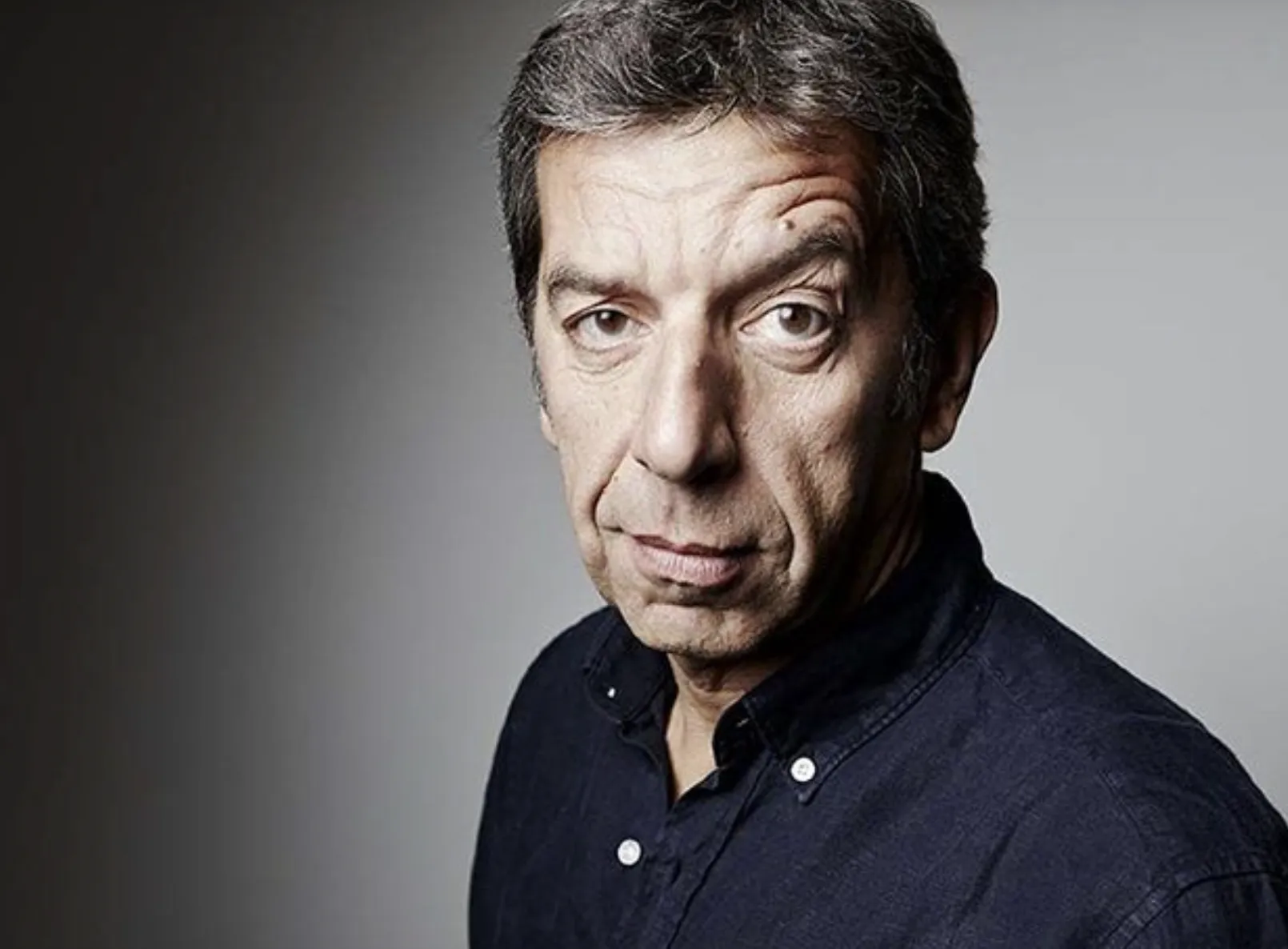
Hacked! – Episode #8
Michel-Édouard Leclerc, head of the E.Leclerc group and a familiar figure in the French media, chose to respond personally on his verified X account to a wave of false information circulating on social media. Rather than ignoring these rumours, he published a message detailing point by point the content he describes as “delusions” — some grotesque, others more concerning — launched, according to him, by organised disinformation networks.
This choice to respond publicly is in itself significant. It reflects a shift in the way public figures deal with disinformation: silence is no longer tenable when rumours reach millions of people within hours, affect immediate family, and begin to damage the commercial reputation of a brand.
Deepfake audio, fake death, fake street: the personal fake news targeting Michel-Édouard Leclerc
A fake remarriage staged with an AI-generated voice
Michel-Édouard Leclerc explains that he has been targeted, for the third time, by a fake remarriage announcement distributed simultaneously on Facebook, Google and TikTok. The distinctive feature of this version: it is staged using an AI-generated voice imitating a journalist providing live commentary on the ceremony, giving the content the appearance of an authentic news report.
This type of format — synthetic voice, journalistic tone, multi-platform distribution — illustrates the growing sophistication of disinformation techniques. These are no longer simple texts or rough photomontages, but synthetic content designed to mimic the hallmarks of verified information.
Michel-Édouard Leclerc notes that this type of rumour has no direct consequences for his immediate circle, who have grown accustomed to this kind of false information through sheer repetition. This detail reveals a troubling reality: some public figures are targeted so regularly that they end up developing a forced tolerance for disinformation about themselves.
A fake death announcement shared by thousands of users
The second episode is considerably more serious. Thousands of users on X shared the announcement of a sudden death of Michel-Édouard Leclerc, causing a shock to his own children before he publicly denied it. He jokes about having had to “come back to life” to continue his work — but behind this turn of phrase lies a difficult reality: a fake death announcement directly affecting the family of a public figure constitutes a serious harm, regardless of how manifestly absurd it may be.
He also flags a third personal rumour: messages claimed that a street in Concarneau or Landerneau had been named in his honour — which is not the case. While this fake news may seem trivial, it illustrates the sheer variety of forms that digital identity manipulation can take: from frontal attacks to local rumours, every register is exploited.
Fuel cut with water, halal products: the commercial fake news about E.Leclerc
Beyond the personal rumours, two false claims target the brand itself and its commercial practices — with very different underlying mechanics.
“E.Leclerc cuts its fuel with water”: a technically absurd rumour, but massively shared
The first claims that E.Leclerc “cuts its fuel with water” in order to offer lower prices. Michel-Édouard Leclerc himself highlights the technical absurdity of this claim: such a process would simply stop engines from combusting, making the fuel unusable. Yet the rumour generated tens of thousands of comments — proof that a claim does not need to be plausible to spread massively, as long as it activates a pre-existing sense of distrust towards a major retailer.
This mechanism is well documented in the psychology of disinformation: rumours that build on already entrenched negative perceptions — here, suspicion towards the practices of large supermarket chains — spread far faster than the denials that follow them.
60% halal products: a rumour with a strong identity dimension
The second commercial rumour is of a different nature and potentially more dangerous. It claims that Michel-Édouard Leclerc had recommended that 60% of products sold at E.Leclerc be halal-certified. He notes that this information emerged only three days before his message and was picked up without any credibility check.
This type of fake news with a strong identity dimension follows a different logic from ordinary commercial rumours: the aim is not simply to damage a brand’s reputation, but to exploit a sensitive topic in order to provoke a strong emotional reaction and maximise sharing. The speed at which this type of content spreads, combined with its potential for polarisation, makes it one of the most concerning forms of organised disinformation.
Why public figures and brands are prime targets for disinformation
The Michel-Édouard Leclerc case illustrates a broader phenomenon: heads of high-profile companies face two types of exposure simultaneously. On one hand, their personal visibility makes them vulnerable to rumours touching their private lives. On the other, their role leading a major brand makes them targets for commercial disinformation campaigns designed to undermine consumer trust.
This dual exposure is being exploited in increasingly sophisticated ways. Fraudulent content is no longer designed merely to deceive — it is crafted to trigger strong emotional reactions, maximise sharing, and reach as many people as possible before any denial can catch up.
How to identify and avoid spreading false information
When faced with surprising information about a public figure or a brand, a few reflexes help avoid propagating fake news:
- Check whether the person concerned has themselves responded on their official verified accounts — this is often one of the most reliable signals, even if those accounts can themselves be hijacked. Be wary of content with a strong emotional charge — marriage, death, commercial scandal — that exploits urgency to bypass critical thinking.
- Question the technical plausibility of a claim before accepting it as fact: a technically impossible rumour, such as fuel cut with water, should have been dismissed immediately. Finally, identify the original source of the content and check whether it links back to verifiable accounts.
These reflexes are not always sufficient — the growing sophistication of AI-generated content makes detection increasingly difficult for the untrained eye.
Content certification: guaranteeing the authenticity of official statements
This case follows the same logic as that of Jeff Bezos, who also faced a false rumour widely shared before any official denial could be issued.
Without a proof of authenticity established at source, false information can circulate freely and reach thousands of people before a denial manages to catch up with it. Content certification ensures that an official statement remains verifiable and clearly distinct from any subsequent fabrication.
Discover how Certiphy.io protects the digital identity of executives and brands →
📲 See the original post on our Instagram account: Hacked! Episode #8